

 yamaco
  このページをPDF保存する
要約問題概要
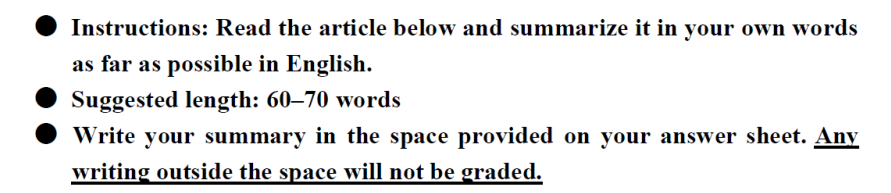
長文の語彙数:約180~200語
要約後の単語数:60~70語
構成:概ね3段落構成
文の難易度:英検2級程度
目標解答時間:約20分
読みやすさ:適切なディスコースマーカー(つなぎ語)を使う
要約のコツ1:なるべく自身の言葉に言い換える
要約のコツ2:具体的な情報を抽象化・一般化する
要約のコツ3:「文」を「名詞句」に短縮する
つなぎ言葉リスト:(毎回、色々試してみよう)
- 順接・添加
therefore (それゆえに), in addition (さらに), additionally (加えて), besides (その上), furthermore (さらに), moreover (その上), also (また), similarly (同様に), equally (同じように) - 逆接
however (しかし), although (にもかかわらず), despite (にもかかわらず), yet (それでも), nevertheless (それにもかかわらず), even though (たとえ〜でも), on the contrary (それとは逆に), nonetheless (それでもなお), still (それでも), conversely (逆に) - 対比
on the other hand (他方では), while (〜の間に), meanwhile (その間に), in contrast (対照的に), conversely (逆に), whereas (一方で), alternatively (代わりに), by comparison (比較すると), unlike (〜と違って) - 結論
as a result (その結果), in conclusion (結論として), in the end (最終的に), consequently (その結果として), thus (したがって), ultimately (最終的に), therefore (それゆえに), hence (それゆえ) - 因果関係
because (なぜなら), due to (〜によって), since (〜なので), as (〜だから), for this reason (この理由で), as a consequence (その結果として), owing to (〜のために), given that (〜を考慮すると) - 例示
for example (例えば), for instance (例えば), such as (例えば〜のように), namely (すなわち), specifically (具体的に), in particular (特に), to illustrate (例を挙げると) - 強調
indeed (確かに), in fact (実際に), obviously (明らかに), without a doubt (間違いなく), certainly (確かに), of course (もちろん), particularly (特に), especially (特に) - 比較
similarly (同様に), equally (同じように), in the same way (同じように), likewise (同様に), just as (〜のように), as well as (〜だけでなく)
スポンサーリンク
練習問題:韓国映画の世界的拡大 — 映画産業への公的支援は妥当か
英検準1級の要約問題は、3段落・約200語の英文が出ます。段落の役割は毎回同じで、①背景 → ②賛成派(Supporters … で始まる)→ ③譲歩の言葉+批判派。まず読んでみてください。
Korean films and television dramas have won audiences far beyond Asia over the past decade, and their success is often traced to decades of government support. Public agencies have funded film schools, reduced production costs through subsidies, and paid to promote Korean titles at international festivals. Several other countries are now studying this model and considering similar programs for their own creative industries.
Supporters of public funding argue that cultural exports bring benefits no ordinary industry can match. They say that a popular drama sends tourists, students, and shoppers toward the country that produced it, raising demand for its food, its cosmetics, and its language. Furthermore, they claim that subsidies allow directors to take creative risks, since a studio that must recover every cost tends to repeat whatever sold well last year.
Despite this, critics question whether taxpayers should pay for entertainment at all. They argue that public money would achieve more in hospitals or schools, and that a genuinely popular industry ought to be able to support itself. Others warn that officials who control budgets may quietly discourage films critical of the government, narrowing the range of stories that reach audiences and discouraging the very originality the policy was meant to protect.
(203 words)
練習問題:日本語訳
韓国の映画とテレビドラマは、この10年でアジアをはるかに越える観客を獲得した。その成功はしばしば、数十年にわたる政府の支援によるものだと説明される。公的機関は映画学校に資金を出し、補助金で制作費を下げ、国際映画祭で韓国作品を宣伝する費用も負担してきた。いま複数の国がこの手法を研究し、自国の創造産業向けに似た制度を検討している。
公的支援に賛成する人々は、文化の輸出には他のどの産業にもない効果があると主張する。人気のドラマは、それを生んだ国へ観光客・留学生・買い物客を送り込み、その国の食品や化粧品、そして言語への需要を高めるという。さらに、補助金があるからこそ監督は冒険ができるとも言う。かかった費用をすべて回収しなければならない制作会社は、去年売れたものを繰り返しがちだからである。
これに対して批判する人々は、そもそも娯楽に税金を使うべきなのかと問う。同じ公金は病院や学校に回した方が成果が大きく、本当に人気のある産業なら自力で立てるはずだ、と論じる。予算を握る役人が政府に批判的な作品をそれとなく遠ざけ、観客に届く物語の幅を狭め、この政策が守ろうとしたはずの独自性をかえって損なうおそれを指摘する人もいる。
要約回答例
62〜70語・4文・1段落にまとめます。文の役割は①主題 → ②賛成側 → ③賛成側をもう1つ → ④批判側で、公式の解答例は6回とも この4文の形です。
Korean films and dramas, which have gained worldwide audiences, owe much of their success to decades of government funding. Supporters claim that cultural exports attract tourists and students and raise demand for the country’s food and cosmetics. Furthermore, they argue that subsidies let directors take creative risks rather than repeat past successes. However, critics contend that public money belongs elsewhere and that officials may discourage films criticizing the government.
(69 words / 4 sentences)
要約回答例:日本語訳
世界中に観客を得た韓国の映画とドラマは、その成功の多くを数十年にわたる政府の資金に負っている。賛成派は、文化の輸出が観光客や留学生を呼び、その国の食品や化粧品への需要を高めると主張する。さらに、補助金があれば監督は過去の成功をなぞらずに冒険できるという。しかし批判派は、公金は他に使うべきであり、役人が政府に批判的な作品を遠ざけかねないと論じている。
⚠ 自分の意見やまとめは書きません。「だから〜すべきだ」と締めたくなりますが、公式の解答例には I think も In conclusion も Therefore も出てきません。要約は、本文にあることだけを短くする作業です。
要約解説・言い換えリスト
原文3段落を、要約4文に対応させます。段落1=第1文/段落2=第2文と第3文/段落3=第4文。賛成側だけ2文になるのは、公式の解答例がそうなっているからです。
第1段落: 韓国映画の成功と政府の支援
オリジナルテキスト:
- 「Korean films and television dramas have won audiences far beyond Asia over the past decade, and their success is often traced to decades of government support. Public agencies have funded film schools, reduced production costs through subsidies, and paid to promote Korean titles at international festivals. Several other countries are now studying this model and considering similar programs for their own creative industries.」
要約文:
- 「Korean films and dramas, which have gained worldwide audiences, owe much of their success to decades of government funding.」
解説:
- 背景段落を1文に。
which have gained worldwide audiencesと関係詞で説明を入れ、主節をowe much of their success to decades of government funding(成功の多くを政府の資金に負っている)にまとめます。他国が模倣を検討している話は落とします。
言い換え箇所:
- 「their success is often traced to decades of government support」 → 「owe much of their success to decades of government funding」
(その成功はしばしば政府の支援によると説明される → 成功の多くを政府の資金に負っている(受け身の説明を能動の動詞1語に)) - 「Public agencies have funded film schools, reduced production costs through subsidies, and paid to promote Korean titles」 → 「decades of government funding」
(映画学校への出資・補助金・宣伝費 → 数十年にわたる政府の資金(3つの具体策を名詞句1つに))
第2段落: 賛成派 — 文化の輸出がもたらすもの
オリジナルテキスト:
- 「Supporters of public funding argue that cultural exports bring benefits no ordinary industry can match. They say that a popular drama sends tourists, students, and shoppers toward the country that produced it, raising demand for its food, its cosmetics, and its language. Furthermore, they claim that subsidies allow directors to take creative risks, since a studio that must recover every cost tends to repeat whatever sold well last year.」
要約文:
- 「Supporters claim that cultural exports attract tourists and students and raise demand for the country’s food and cosmetics.」
- 「Furthermore, they argue that subsidies let directors take creative risks rather than repeat past successes.」
解説:
- 賛成側は2文。
Supporters claim that→Furthermore, they argue thatの順です。「観光客・留学生・買い物客」「食品・化粧品・言語」のような3つ並びは、代表の2つに削ります。
言い換え箇所:
- 「sends tourists, students, and shoppers toward the country that produced it」 → 「attract tourists and students」
(観光客・留学生・買い物客を送り込む → 観光客と留学生を呼ぶ(代表2つに絞る)) - 「raising demand for its food, its cosmetics, and its language」 → 「raise demand for the country’s food and cosmetics」
(食品・化粧品・言語への需要を高める → その国の食品と化粧品への需要を高める) - 「a studio that must recover every cost tends to repeat whatever sold well last year」 → 「rather than repeat past successes」
(費用を回収せねばならない制作会社は去年売れたものを繰り返す → 過去の成功をなぞる代わりに(理由の説明を対比の句に))
第3段落: 批判派 — 税金の使い道と表現の幅
オリジナルテキスト:
- 「Despite this, critics question whether taxpayers should pay for entertainment at all. They argue that public money would achieve more in hospitals or schools, and that a genuinely popular industry ought to be able to support itself. Others warn that officials who control budgets may quietly discourage films critical of the government, narrowing the range of stories that reach audiences and discouraging the very originality the policy was meant to protect.」
要約文:
- 「However, critics contend that public money belongs elsewhere and that officials may discourage films criticizing the government.」
解説:
However, critics contend that。批判の2点(公金の使い道/表現の萎縮)を and で1文に入れます。films criticizing the governmentと分詞で短くしています。
言い換え箇所:
- 「public money would achieve more in hospitals or schools」 → 「public money belongs elsewhere」
(公金は病院や学校でより大きな成果を上げる → 公金は他に使うべきだ) - 「officials who control budgets may quietly discourage films critical of the government」 → 「officials may discourage films criticizing the government」
(予算を握る役人が政府に批判的な作品をそれとなく遠ざける → 役人が政府を批判する作品を遠ざける(関係詞を分詞に))
全体として、原文の 約200語を70語弱に落とします。削るのは具体例・数字・地名・言い換えの繰り返し、残すのは誰が何を主張しているかです。賛成派・批判派の立場をはっきり書き分けられていれば、細かい事実が抜けていても減点にはなりません。
こちらの記事もお薦めです:英検準1級 文章要約問題 04:人類の歴史とともに進化した犬たち
英検準1級要約問題対策は ask本校 でどうぞ:無料体験レッスン受付中
要約問題の基本(約200語を4文にする手順)は「英検準1級 要約問題のコツ|約200語を4文にする手順と、言い換えの作り方」にまとめてあります。ほかの練習問題は「英検準1級要約」から。
スポンサーリンク